
An evening walk through Old Escondido can quickly show why mature Canary Island Date Palms matter here. Within only a few blocks, the neighborhood holds full-canopied landmark palms, palms showing severe decline, and streets where multiple mature CIDPs rise above homes, sidewalks, and older properties.
I do not have a complete inventory, but I have not found another inland North County neighborhood with this many mature CIDPs packed into ordinary street views. They rise above houses, apartments, sidewalks, and older properties block after block.
I am recording visible condition, not diagnosing every declining crown from the sidewalk. SAPW is one local concern; water, nutrition, pruning, disease, age, and other stress may also be involved.
Three views from the same neighborhood
The contrast was clear: some mature Canary Island Date Palms still carried strong, balanced canopies, while others nearby showed dramatic crown loss and fallen frond material. That range of conditions is exactly why it is worth keeping a careful visual record. Photos taken today help show how Old Escondido's urban palm canopy changes over time.
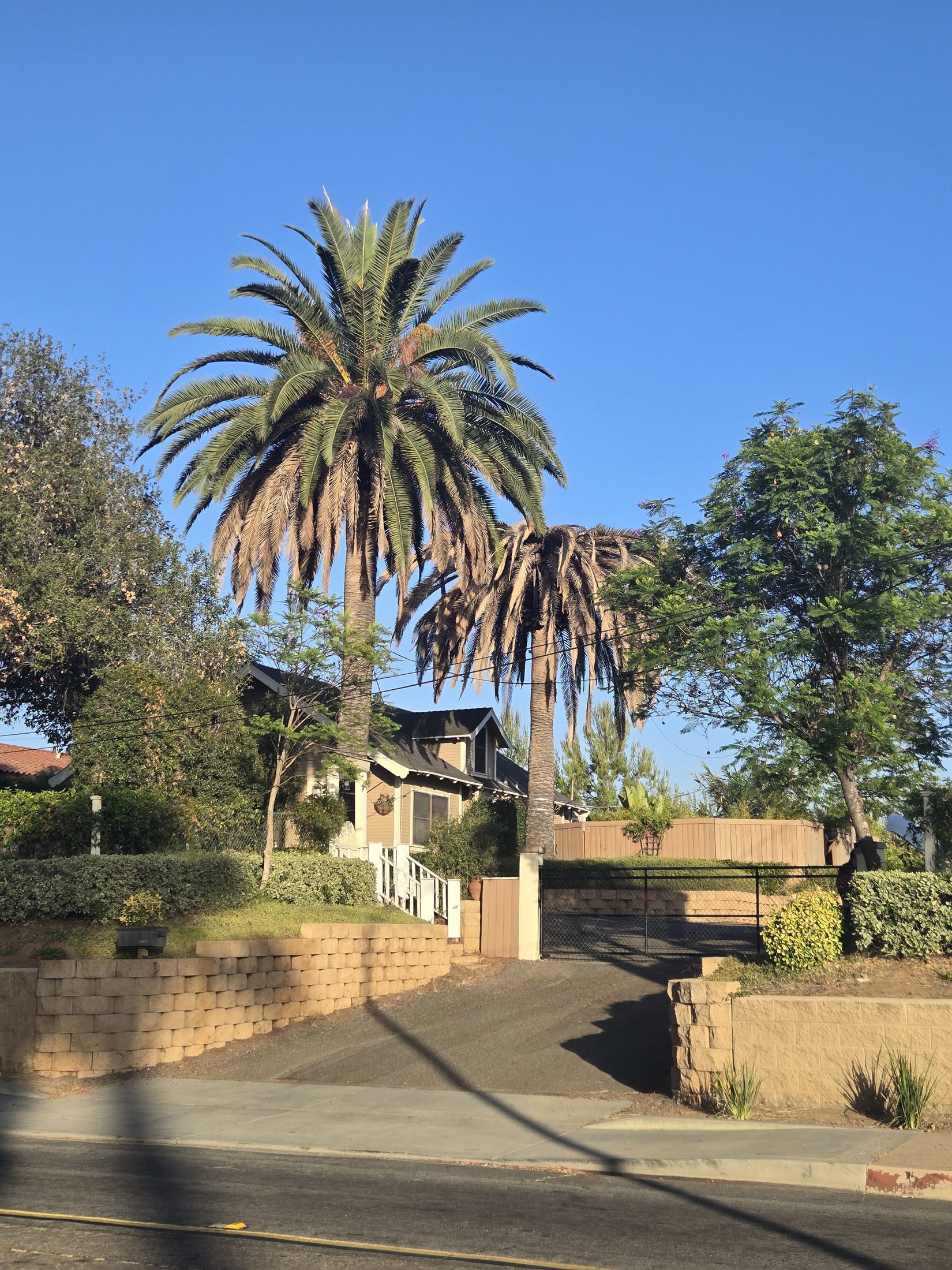
A striking contrast in Old Escondido: a mature Canary Island Date Palm with a full canopy stands beside a nearby palm experiencing severe decline.
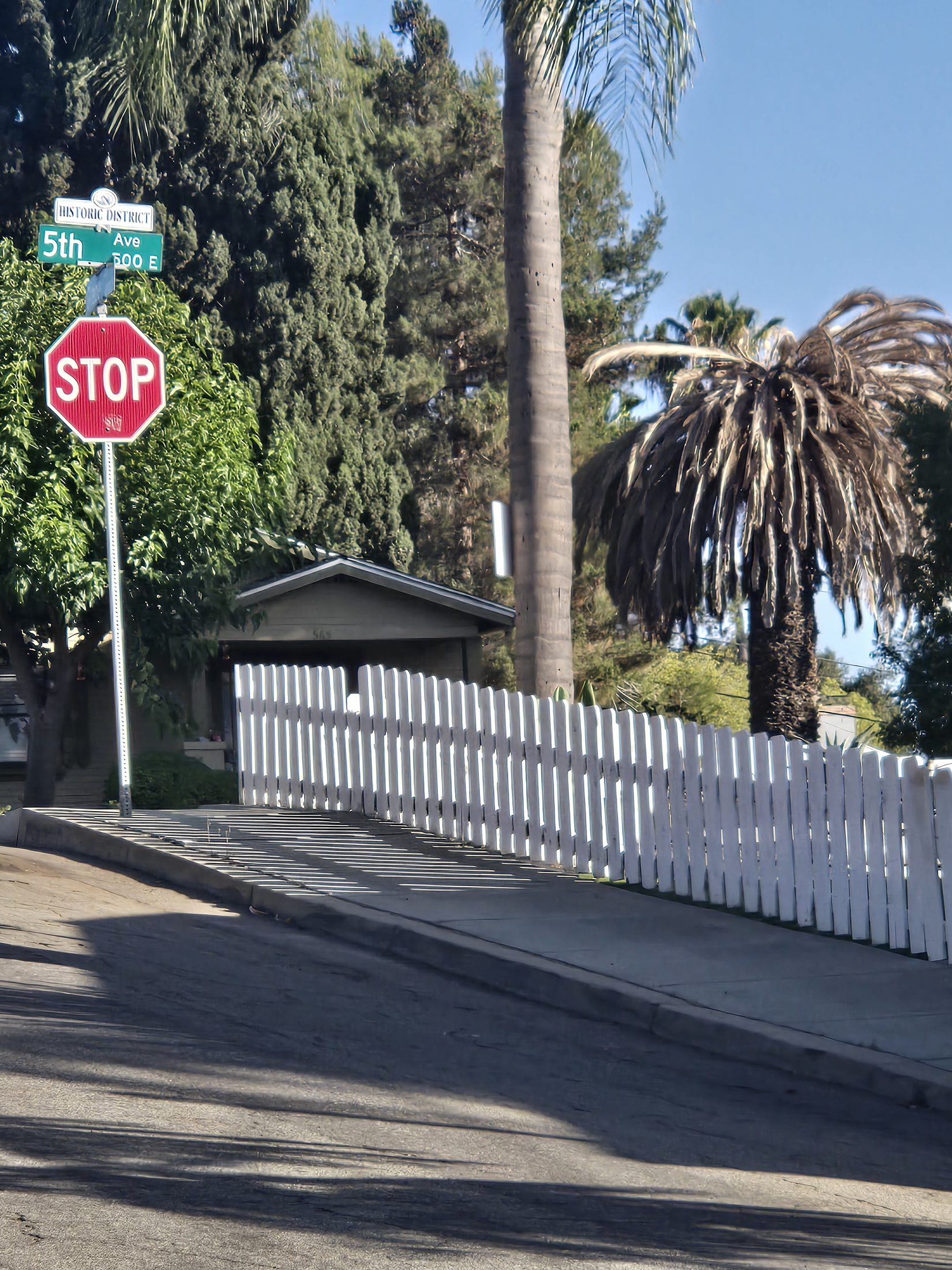
A Canary Island Date Palm near the Historic District sign showing advanced crown decline and dramatic canopy loss.
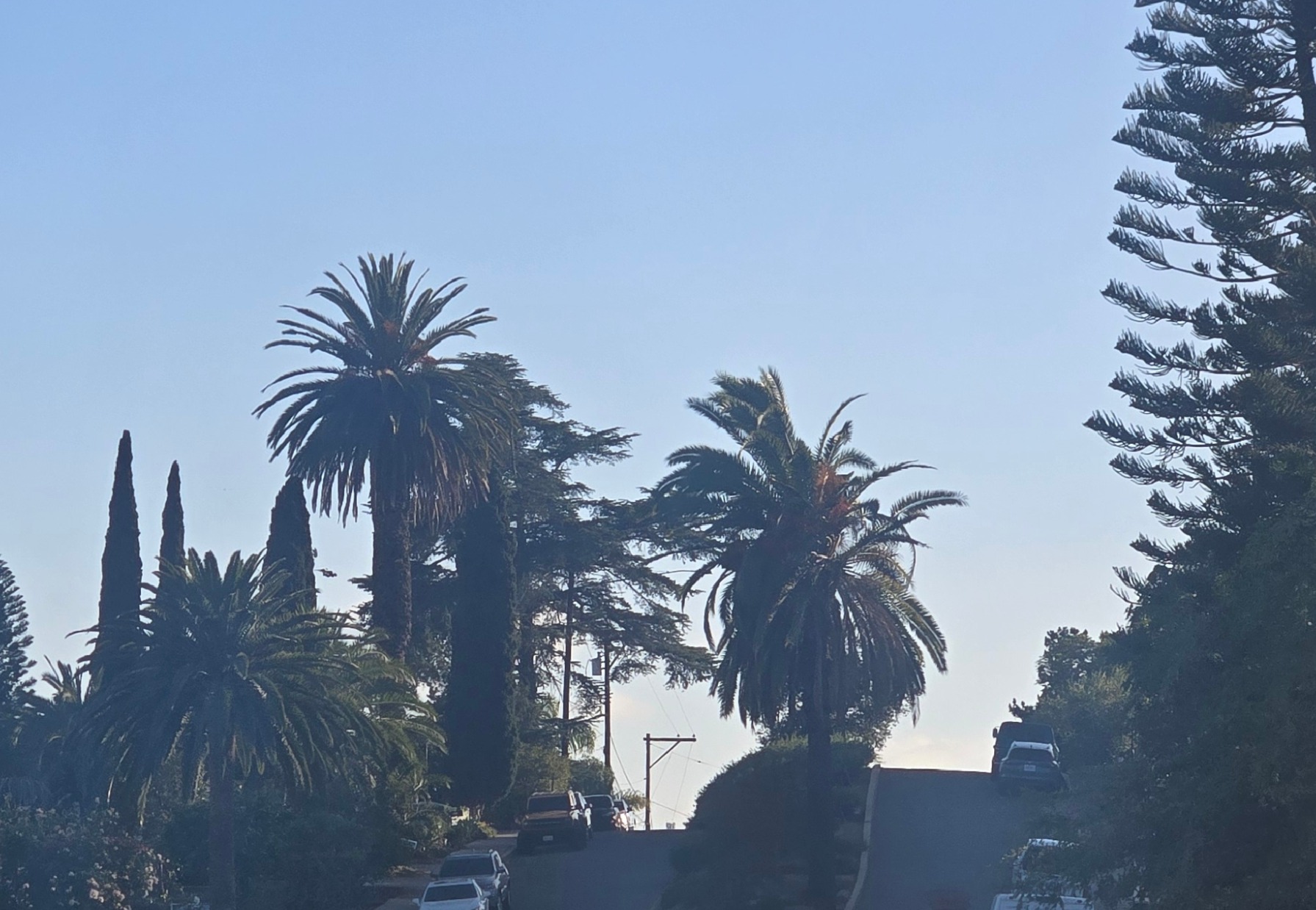
Multiple mature Canary Island Date Palms rising above the streets of Old Escondido, illustrating the neighborhood's remarkable palm canopy.
Keep something you can compare
Mature CIDPs can change quickly once crown structure, spear condition, or frond retention begins to shift. Property owners with mature palms should monitor for sudden canopy changes, asymmetry, spear issues, and premature frond collapse, then compare those observations over time before assuming a cause.
For more, see the Old Escondido palm work, the CIDP Risk Checklist, and the South American palm weevil page.
View the Old Escondido Preservation Initiative