
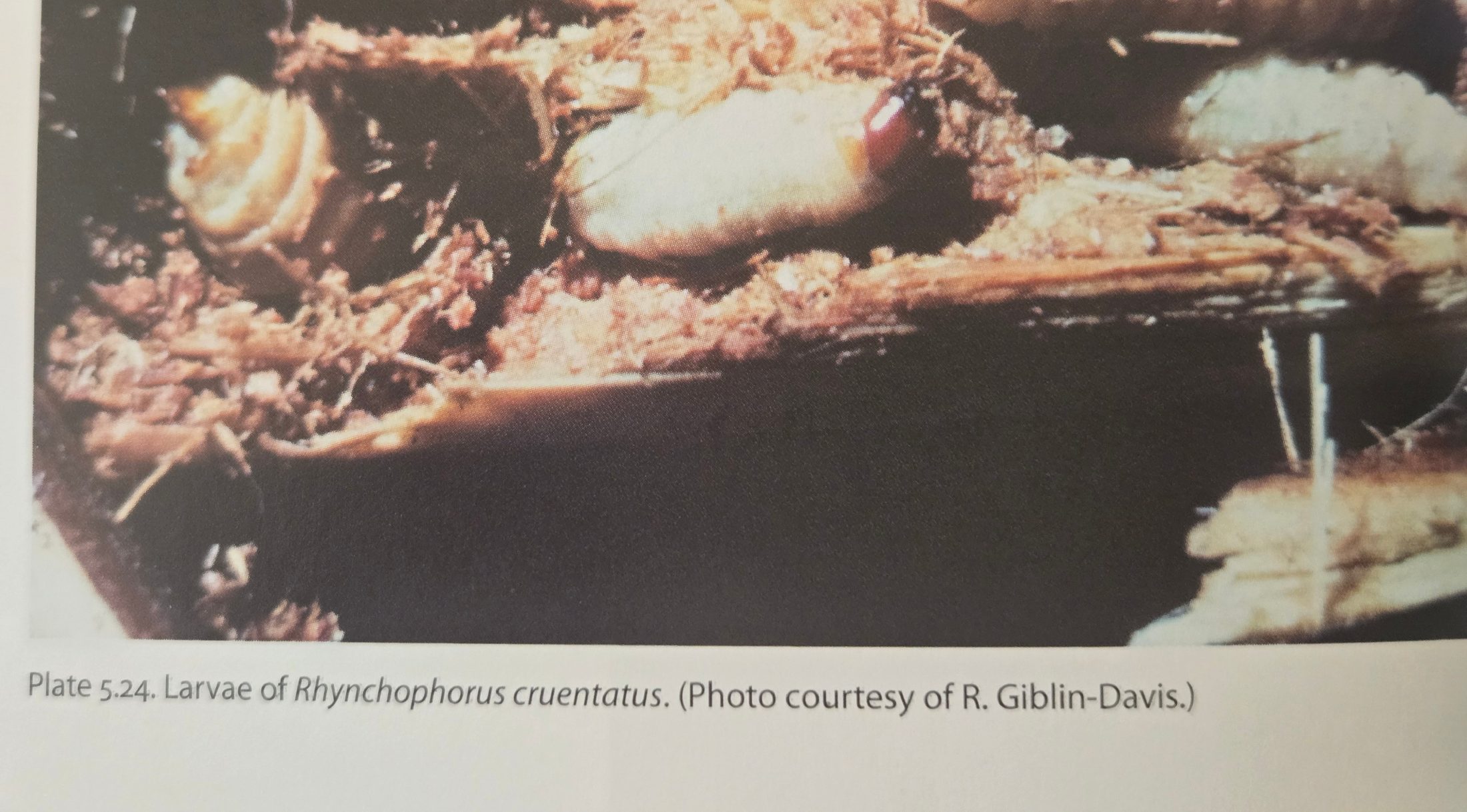
I visited a property with several mature Canary Island date palms in advanced decline. Some had lost most of their canopy. A palm-boring larva had also reportedly been collected on site.
The photographs establish what was visible that day. They do not establish the cause of every declining palm or independently confirm the specimen's identity.
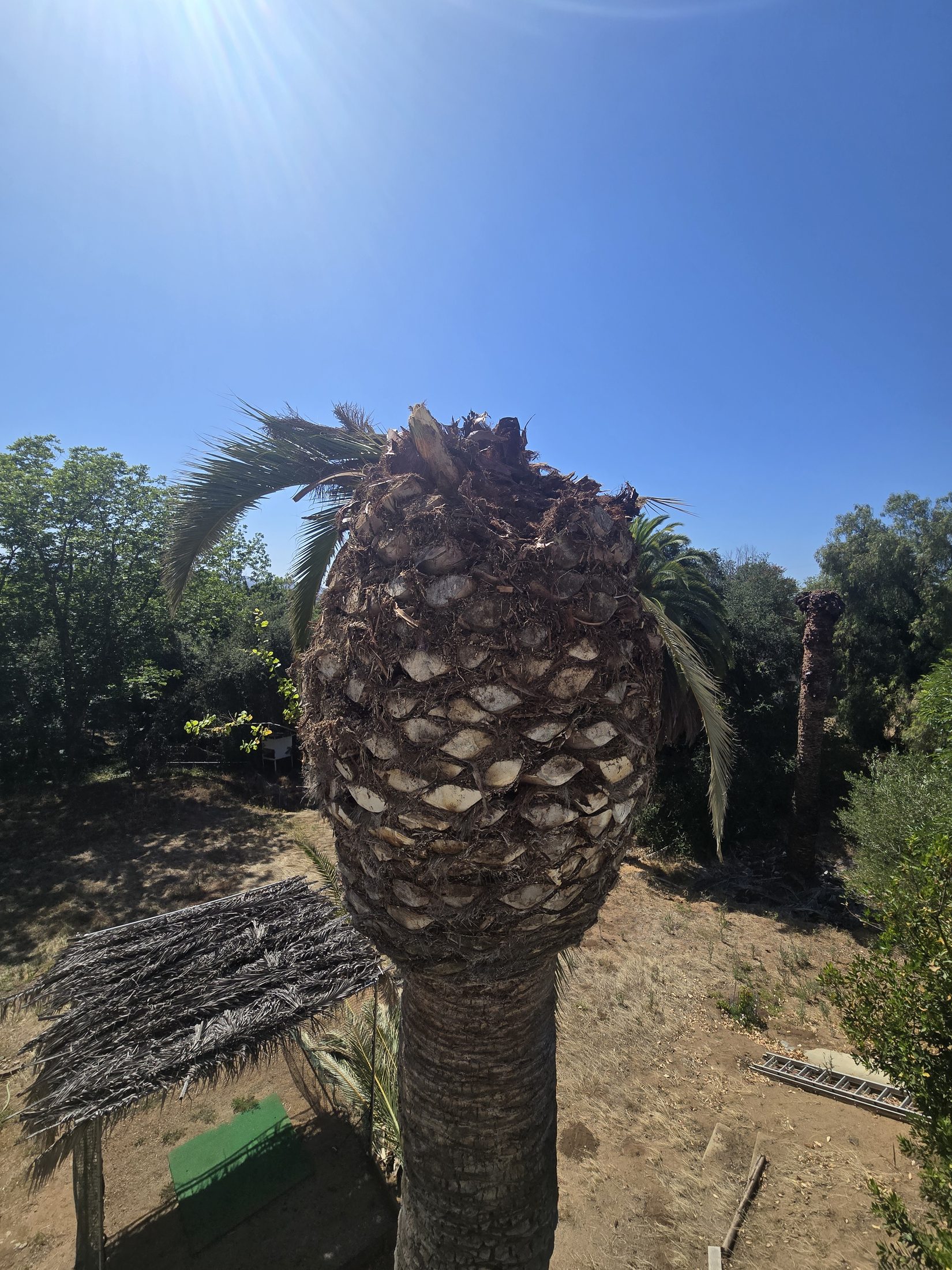
One of the palms with severe canopy loss and crown deterioration.
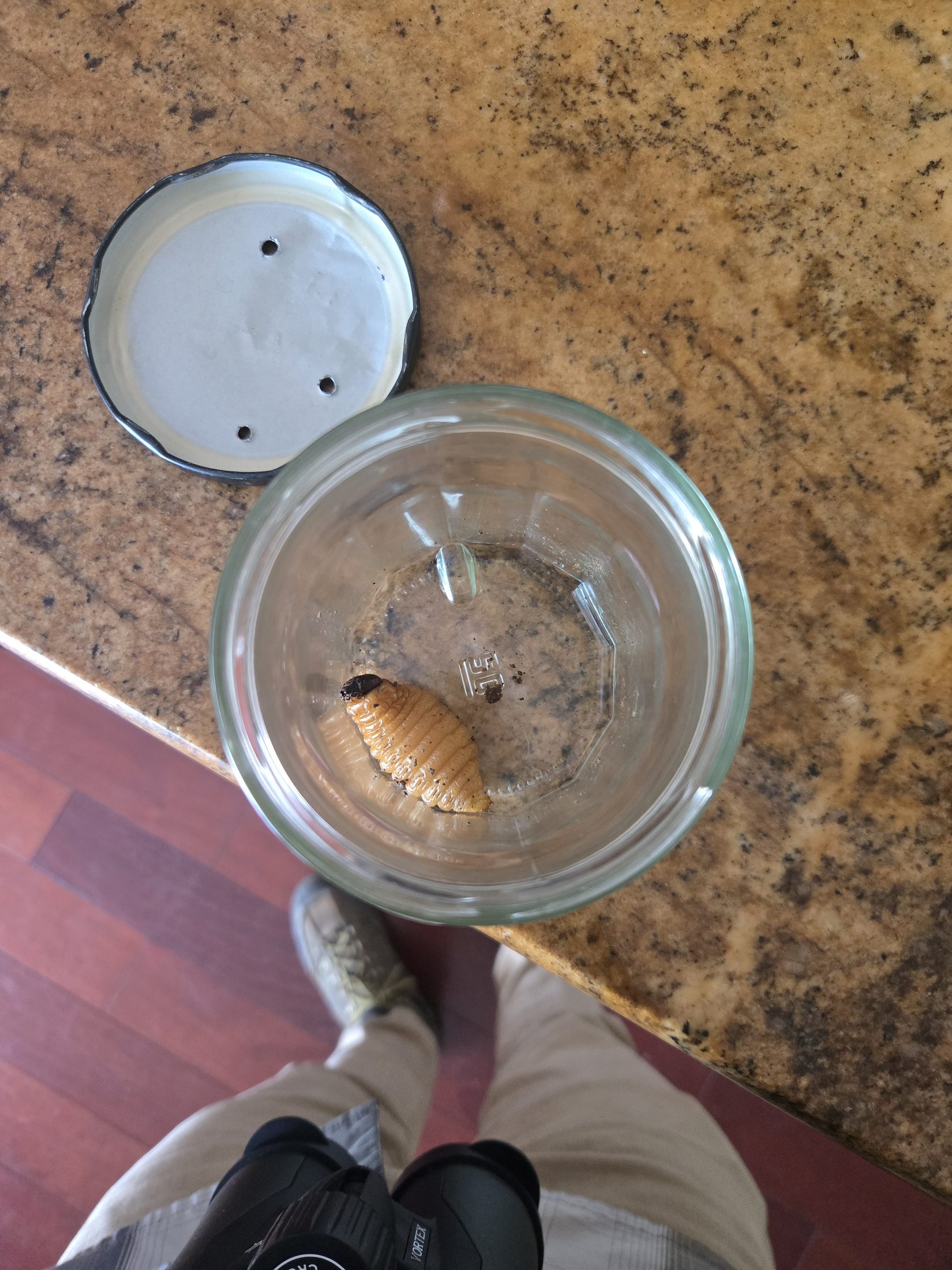
The palm-boring larva reportedly collected near the declining palms.
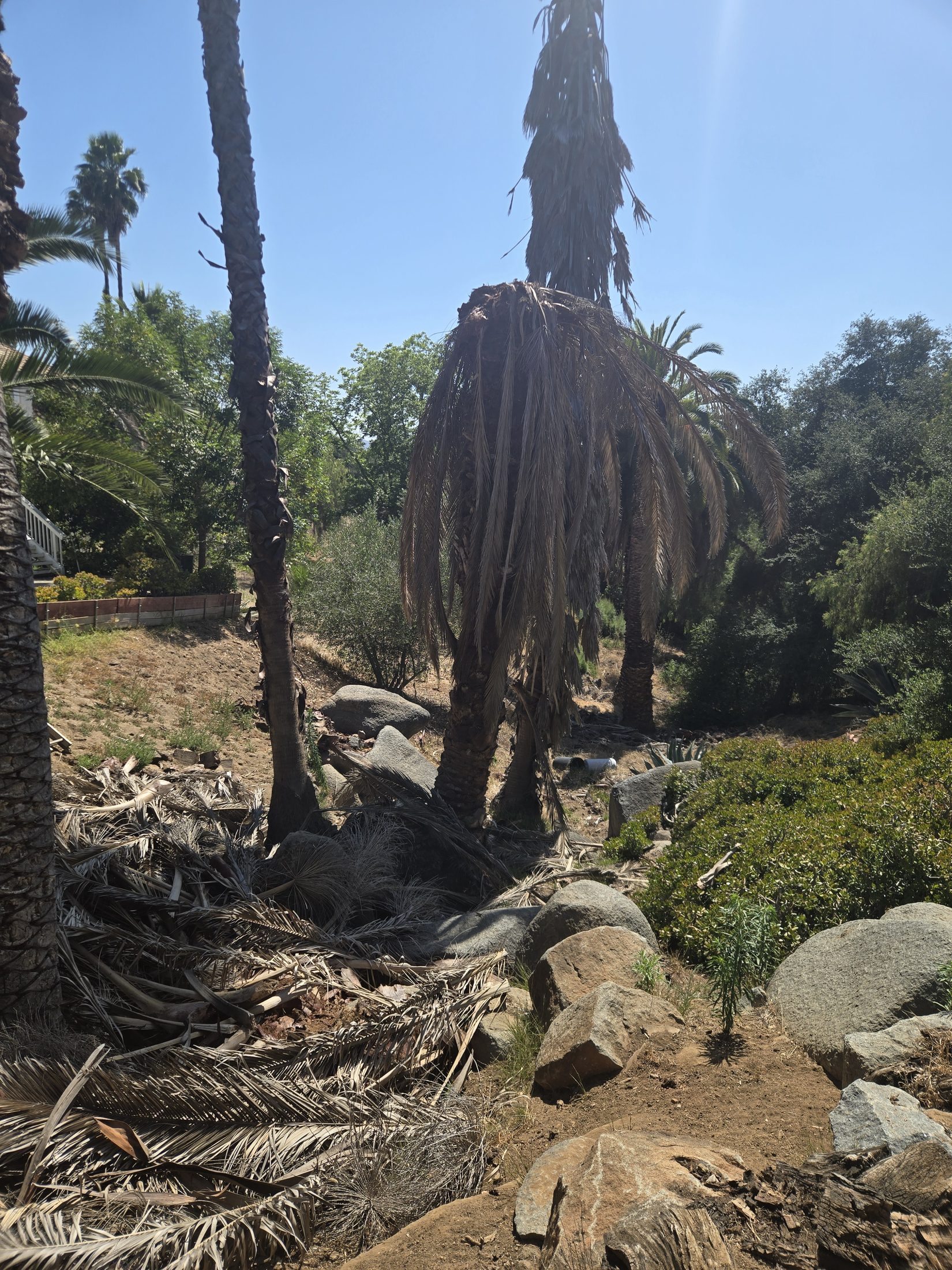
Healthy-looking CIDPs remained close to the declining palms.
The healthy palms are the decision
The severely declining palms draw the eye, but the healthy palms nearby are where an owner still has choices. They can be identified, photographed, monitored, and considered for preventive protection before a crown begins to fail.
Changes worth taking seriously include crown thinning, missing upper fronds, distorted new growth, sudden browning, or rapid canopy collapse. None of those signs proves SAPW by itself. They are reasons to look more closely and compare the palm with earlier photographs.
Related: Canary Island Date Palm Care, Recurring Palm Monitoring, and Palm Care FAQ.